
ALFACOM ENGINEERING LTD.
Pneumatically Operated Process Valves
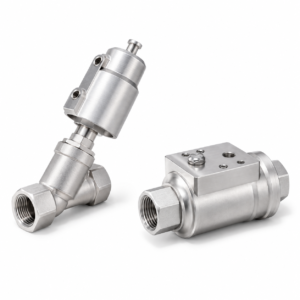
Pneumatically operated process valves open and close using a separate air control supply. Explore the listed angle-seat and straight-through shut-off valve designs for suitable process duties.
Pneumatically Operated Process Valves · ALFACOM catalogue
THE PRODUCT RANGE
Explore the Range
Explore the equipment and selection topics below, then review the detailed catalogue for the selected product.
Read the English selection guidance and open the technical PDF for each valve type below.
Pneumatically Operated Straight-Through Shut-Off Valves
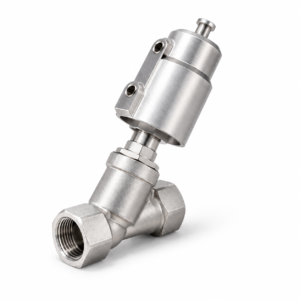
Pneumatically Operated Angle-Seat Valves
Angle-seat valves open and close the process flow using a pneumatic actuator. Select the valve body, seat seal and actuator together for the medium, operating conditions and control requirements.
Configurations and Connections
The attached 100-series catalogue covers threaded, welded, flanged and tri-clamp arrangements. Normally closed, normally open and double-acting configurations are described. Confirm the exact body material, connection, actuator and seal for the ordered model.
Selection Requirements
- Medium, inlet pressure and outlet pressure.
- Operating temperature and required flow.
- Pipe size, connection type and installation space.
- Available control-air pressure.
- Required valve position on loss of control air and operating frequency.
- Control and feedback requirements.
The catalogue includes CF8M/CF8 body options and PTFE sealing, with model-specific pressure data and actuator configurations. Check the applicable pressure and control-air tables rather than selecting from nominal pipe size alone.
Installation and Enquiry
Confirm the flow direction and valve configuration against the selected model's instructions. Send ALFACOM the process conditions, connection details, required operating configuration and quantity for selection assistance and a quotation.
Can one actuator size cover every pressure condition?
No. The pressure differential, flow direction, valve size and actuator configuration affect selection. Review the relevant model table.
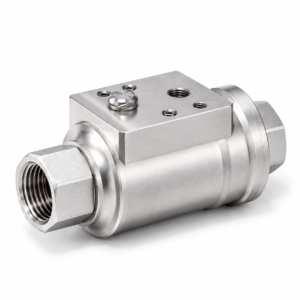
Pneumatically Operated Straight-Through Shut-Off Valves
These two-way shuttle valves open and close a process line through piston movement driven by compressed air. The attached catalogue covers 200- and 201-series arrangements with an integral pneumatic actuator.
Operating Configurations
The catalogue describes normally closed, normally open and double-acting versions. Define the required valve position when control air is lost and match the pneumatic connections and control logic to the selected configuration.
Body and Seal Selection
The catalogue lists CF8M and CF8 stainless steel body options and FPM or EPDM sealing, according to the order code. Select the seal from the actual medium and operating temperature; the options have different compatibility and temperature limits.
The catalogue identifies EPDM for suitable steam and hot-water duties and excludes steam from its listed FPM applications. Confirm the exact valve and seal configuration before specifying steam service.
Pressure, Connections and Flow
Check the series, connection size, flow direction and operating configuration against the model's differential-pressure and control-air tables. The catalogue includes BSP, BSPT and NPT threaded connection options. General range headings do not replace the size-specific selection data.
Information for Selection
Send the medium, inlet and outlet pressures, temperature, required flow, connection size and thread, available air pressure, required failure position, operating frequency and quantity. For replacement, include photographs and the full nameplate code.
Are all straight-through valves interchangeable?
No. Confirm body and seal materials, mounting dimensions, connection standard, flow data and pneumatic operating configuration. Similar appearance does not establish equivalence.
APPLICATION BEFORE SPECIFICATION
Selection Starts with Your Application
Specify the fluid, upstream and downstream pressures, temperature, flow requirement, connections and available control air. Include the required normal or failure position, operating frequency and control accessories. Confirm each valve against its own model documentation.
Catalogue & Technical Documents
Review the model-specific technical information and installation requirements. Send a specification, drawing or existing model reference if you need help selecting equipment.
Discuss Your Application
Send your requirements or a photo of the existing equipment for technical assistance and a quotation.
Availability and lead time are confirmed for the requested model and quantity.